

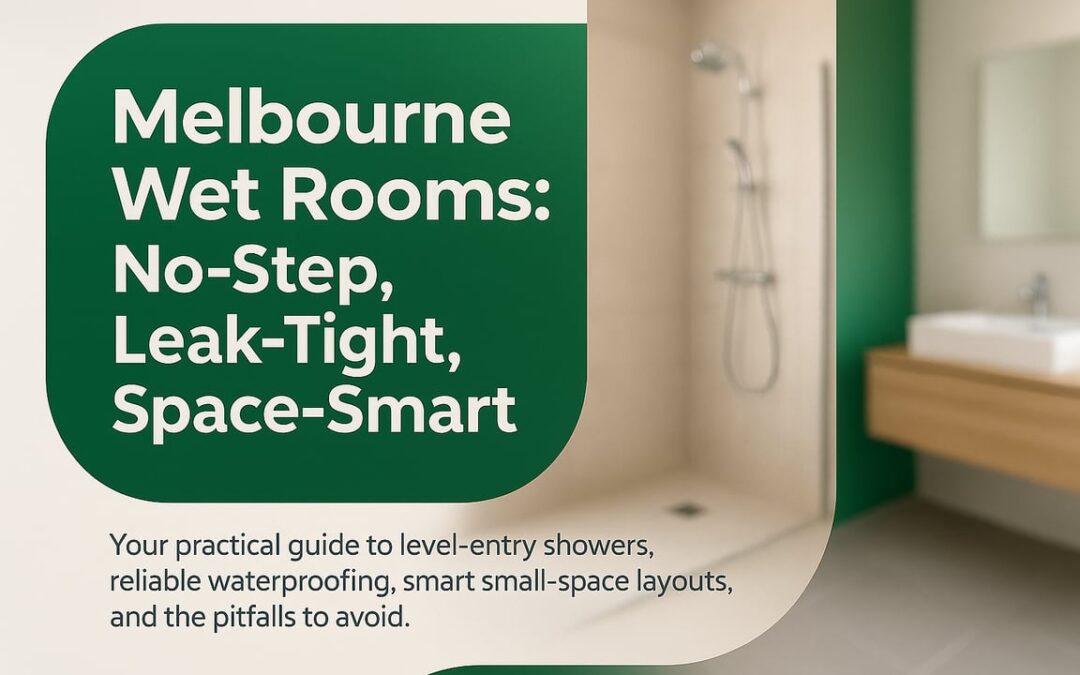
Wet Room Renovations Melbourne: A Practical Homeowner Guide to Level-Entry Showers, Reliable Waterproofing, and Smarter Small-Space Design
Wet rooms are shower-first bathrooms with continuous, fully waterproofed floors and a level or near-level entry. In Melbourne homes, they can boost accessibility, make compact rooms feel larger, and simplify cleaning when detailing is done right.
What a Wet Room Actually Is
A wet room is a bathroom where the shower area is not boxed in by a conventional base. The entire floor is waterproofed and falls are set to a drain. Glass panels may be used to limit splash, but the floor remains continuous for easier movement and cleaning.
- Level or near-level entry with planned falls to a drain.
- Continuous waterproofing under tiles, including upturns at walls and penetrations.
- Tiles selected for slip resistance and durability.
- Joinery and fixtures placed to protect a clear main path.
When a Wet Room Makes the Most Sense in Melbourne
- Compact bathrooms where a level floor and frameless glass keep sightlines open.
- Accessibility goals, future-friendly design, or multi-generational living.
- Terrace homes and apartments where door arcs and tight corridors benefit from open layouts.
- Bayside properties where corrosion-resistant hardware and smart ventilation are important.
Key Planning Decisions That Make Wet Rooms Work
1) Layout and circulation
Protect an approximate 800 mm main path (700 mm is possible in tight rooms with careful detailing). Avoid door swings into the toilet zone and consider cavity sliders to reclaim space.
2) Drain strategy and falls
Choose between linear and point drains based on tile format and set-out.
- Linear drain: simpler single-plane falls, ideal near walls or thresholds; pairs well with large-format tiles.
- Point drain: four-way falls; works with mosaics or smaller tiles; classic, compact choice.
3) Tile format, slip, and set-out
- Large-format porcelain for walls and main floor fields to reduce grout lines.
- Smaller mosaics or textured tiles at the drain zone for controlled falls and traction.
- Align grout joints with benchtops, niches, and mixers for a crisp, professional look.
4) Waterproofing and movement joints
- Continuous membranes with required film thickness and upturns at all perimeters.
- Seal penetrations and specify movement joints by span and exposure.
- Allow cure windows before tiling and before use.
5) Ventilation and condensation control
- Externally ducted extraction sized to room volume; run-on timers or humidity sensors help.
- Apartments benefit from early duct routing and acoustic considerations.
6) Storage without blocking flow
- Drawer-first vanities at 400–430 mm depth to preserve the main path.
- Recessed mirror cabinets and slim towers placed away from direct splash.
- Niches set outside the primary spray line for easier maintenance.
Melbourne Realities: Subfloors, Site Access, and Microclimates
- Timber subfloors: level-entry and waste relocation are often simpler with below-floor access; confirm joist health and vibration before large-format tiles.
- Concrete slabs: plan chases and set-downs early; verify falls and waterproof buildup to avoid threshold lips.
- Inner-terrace and apartment access: sequence deliveries, protect common areas, and coordinate strata approvals.
- Bayside exposures: specify corrosion-resistant fasteners and hardware; maintain regular rinse-down and robust ventilation.
Comfort and Cleanability Upgrades
- Level-entry thresholds and frameless glass for safer, easier movement.
- Under-tile heating for faster drying and winter comfort.
- Rail plus handheld shower for flexibility and easier cleaning.
- Epoxy grout in wet zones and silicone at junctions to reduce staining.
Common Pitfalls to Avoid
- Setting tile sizes before the drain and fall plan is locked.
- Skipping external ducting or under-sizing ventilation.
- Assuming coatings or glass will fix poor falls or gaps in membrane coverage.
- Placing niches directly under shower heads where water pools.
- Using slippery floor tiles without verifying slip ratings.
Mini Layout Playbooks
Compact Terrace Wet Room
- Cavity slider; 400–430 mm wall-hung vanity; linear drain along rear wall.
- Large-format wall tiles with stacked pattern; mosaic floor in shower zone.
- Externally ducted fan with run-on timer; mirrored storage for depth.
Family Wet Room With Easy Clean
- Walk-in panel to limit splash; rail plus handheld shower.
- Drawer-first vanity; epoxy grout in shower; slip-rated floors.
- Niche outside direct spray; under-tile heating for winter drying.
Future-Friendly Ensuite
- Level-entry with linear drain; wall reinforcement for future rails.
- Warm white lighting at 3000–3500 K; soft-close, corrosion-resistant hardware.
- Threshold flush with adjacent flooring for step-free movement.
Budget and Sequencing Signals
- Plan layout first; keep plumbing in one zone where possible.
- Use one hero surface with durable field tiles to control cost.
- Lock drain position and tile set-out before waterproofing.
- Stage work: strip-out and prep, waterproofing, tiling and set-out, cabinetry and fit-off, commissioning.
Related Melbourne Service
For end-to-end planning, waterproofing, tiling, cabinetry, and finishing on level-entry projects, explore wet room renovations Melbourne with a coordinated team that handles layout, selections, and delivery.
FAQs
Are wet rooms only for large bathrooms?
No. Wet rooms often unlock space in compact rooms by removing hob steps and using frameless panels. The key is protecting an approximate 800 mm main path and planning falls and a drain that suit the footprint.
Do linear drains always perform better than point drains?
Both can perform well. Linear drains simplify single-plane falls and suit large-format tiles; point drains suit mosaics and four-way falls. Performance depends on set-out, falls, and debris management.
Will a wet room leak more than a standard shower?
It should not. With a compliant membrane, planned upturns, sealed penetrations, correct falls, and movement joints, a wet room is as robust as a traditional shower enclosure.
How can slip risk be reduced on wet room floors?
Choose slip-rated floor tiles, plan for even falls, keep grout lines clean, and consider under-tile heating to aid drying. Mats near entries can help without creating lips.
Is a wet room suitable for apartments?
Yes, subject to strata rules, acoustic requirements, and slab allowances. Early planning for drainage, ventilation routes, and set-downs is essential.